


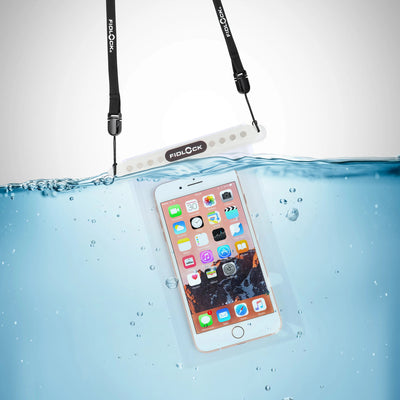

The SUP essentials are a leash, a personal flotation device where required, water, sun protection and a waterproof way to carry your phone and car key. Assume you'll fall in at least once: anything on the board that isn't sealed and attached can end up wet or at the bottom.
Safety first
- Leash. Keeps the board with you if you fall.
- PFD. Rules vary by state and waterway, so check your local maritime authority before you paddle.
- Tell someone where you're paddling and when you'll be back.
- Check the wind. Offshore winds can push you out further than you'd like.
On the board
- A water bottle clipped to the deck bungee.
- Sunscreen, a hat with a strap and polarised sunglasses on a cord.
Your phone and car key
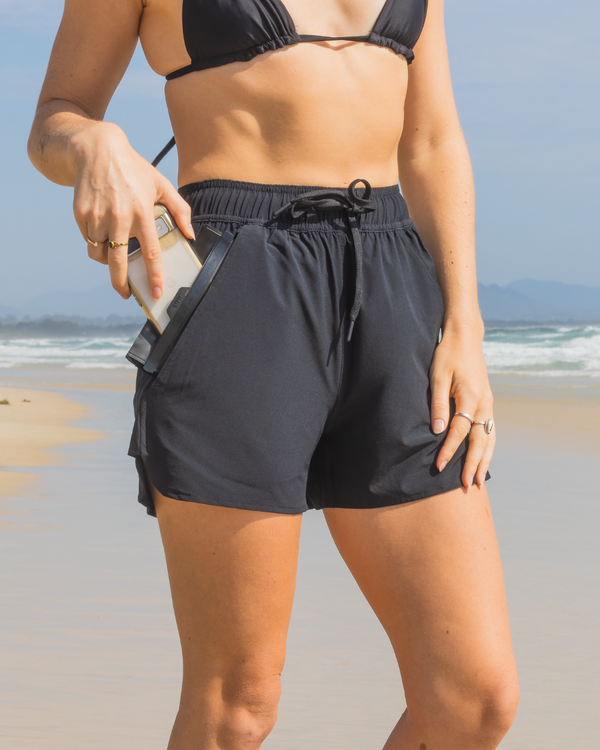
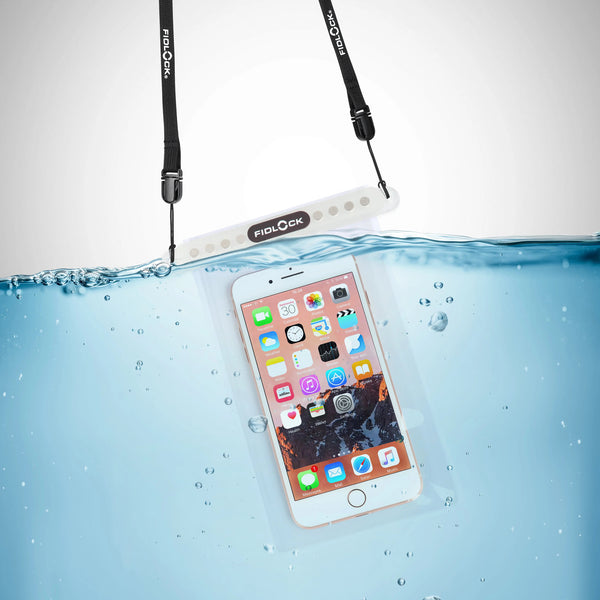
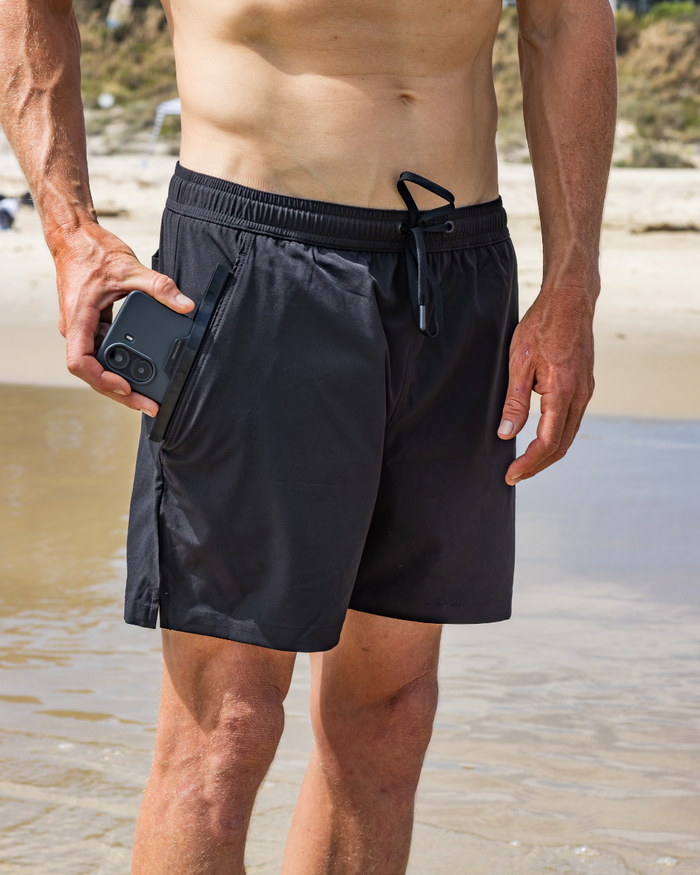
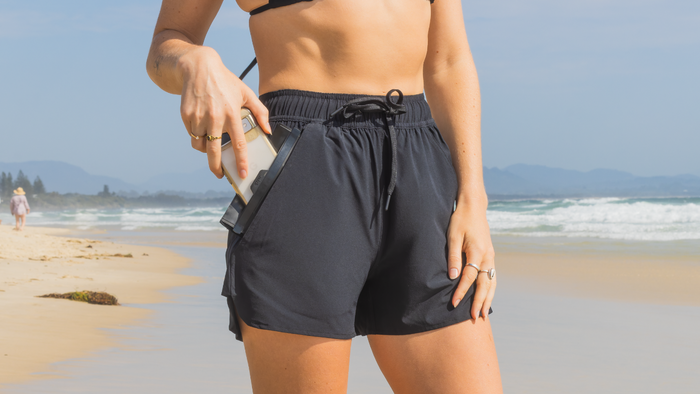
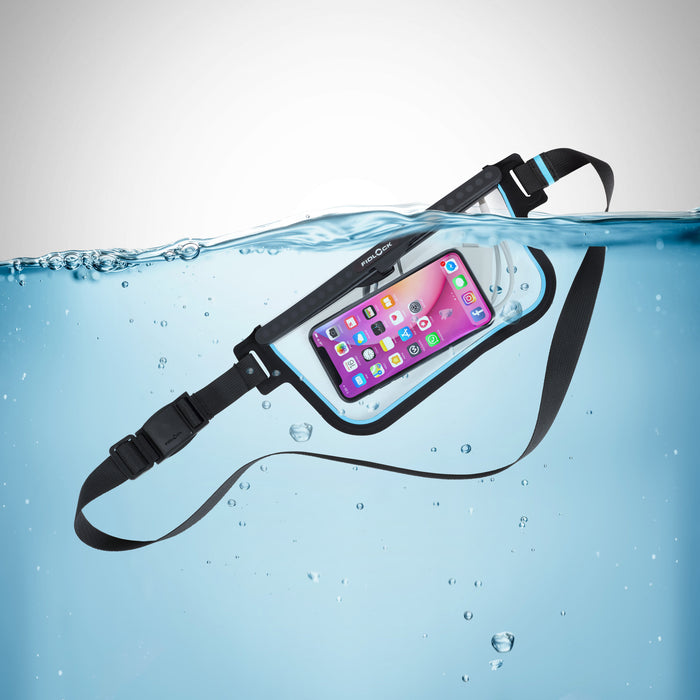
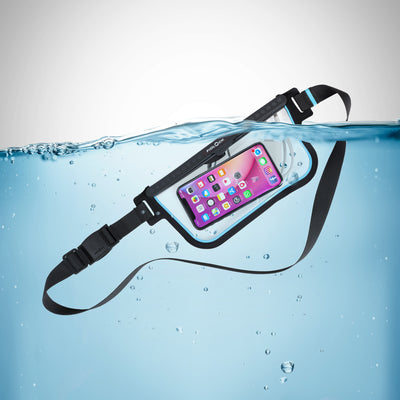
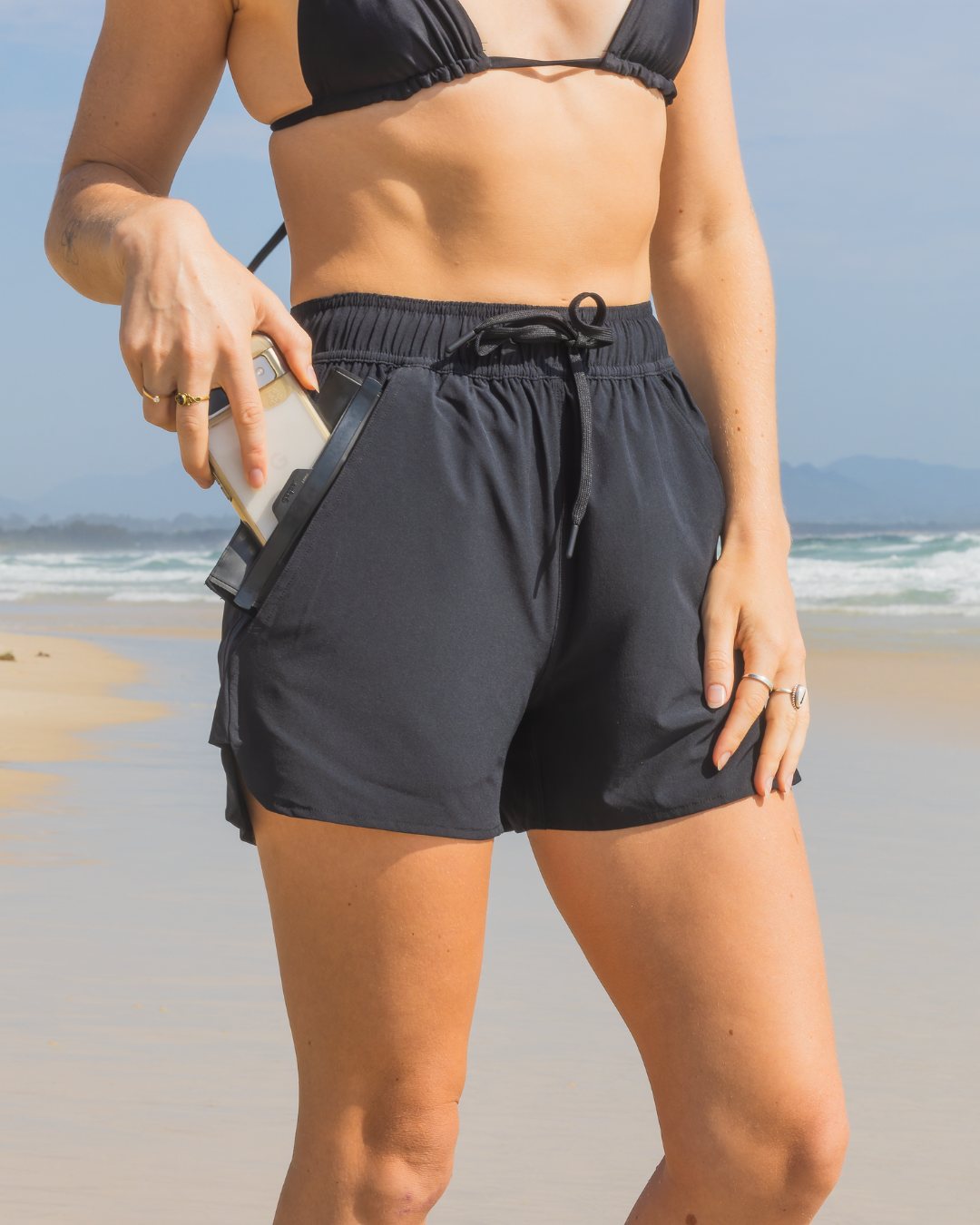
A deck bag can come loose, and a phone in a pocket of ordinary shorts won't survive a fall. The simplest setup is a waterproof pocket in your swim shorts. Ours is IPX8-rated to 30 metres and seals itself with magnets, so your phone and key stay dry even when you go in.
Having your phone on you also means you can call for help if the wind picks up.
What to wear
- Quick-dry swim shorts that don't drag.
- A rash vest or long-sleeve top for sun.
- Booties if you're launching off rocks or oyster beds.
Our picks
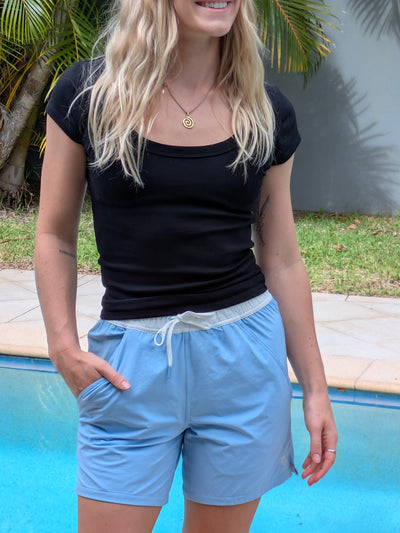
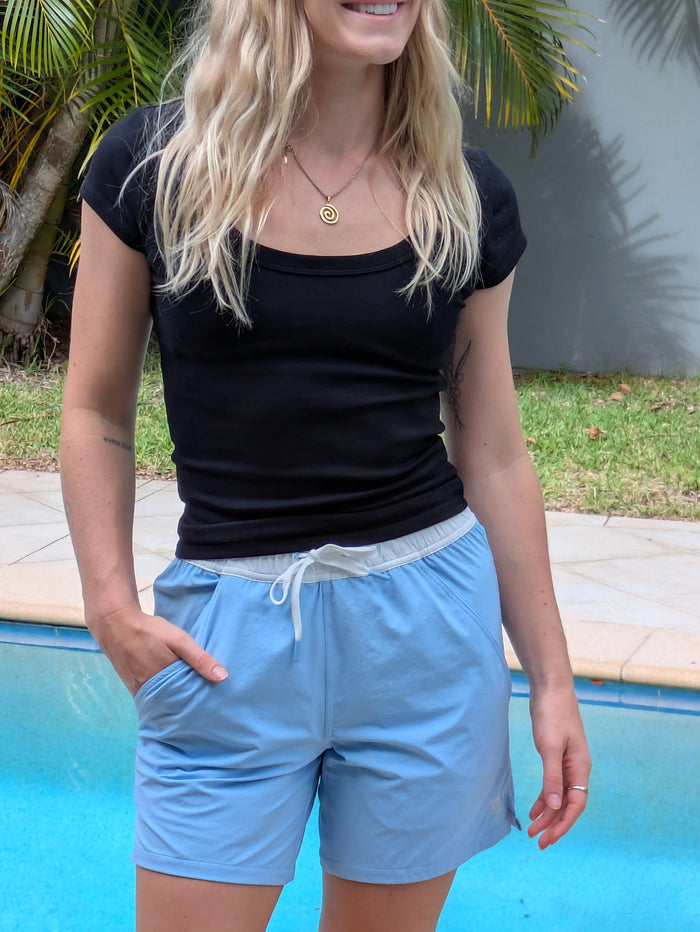
Men: black swim shorts. Women: The Pass mid-length, with 4-way stretch for every stroke. Paddling as a couple? The His & Her Holiday Bundle covers you both.
FAQs
Can I take my phone paddle boarding?
Yes, sealed in an IPX8 waterproof pocket so it survives a fall in.
Do I need a PFD on a stand-up paddle board?
It depends on your state and how far from shore you paddle. Check your local maritime authority's rules.