





You can swim with your phone, but not by trusting the phone's own water rating. Phone ratings are tested in still fresh water for a set time, and manufacturers generally don't cover water damage under warranty. The safe way is to keep the phone sealed in something certified for submersion, like an IPX8 waterproof pocket.
What your phone's water rating means
Many phones carry an IP67 or IP68 rating. Those tests are done in a lab, in still fresh water, at a set depth for a set time. The real world is different:
- Salt water and chlorine are harder on seals than fresh water.
- Waves and diving in push water at pressure.
- Seals age. A drop or a few years of use can weaken them.
That's why water resistance is a backup, not a plan for swimming.
The options for swimming with a phone
1. Leave it on the towel
Dry, but exposed. It's the most common way phones go missing at the beach.
2. A phone pouch around your neck
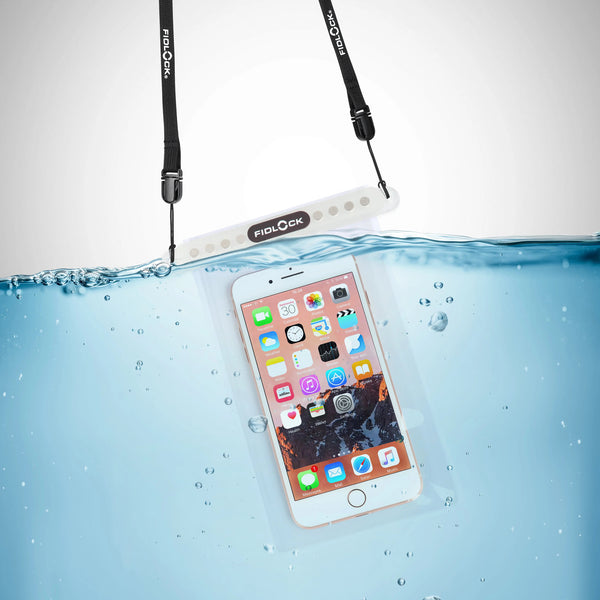
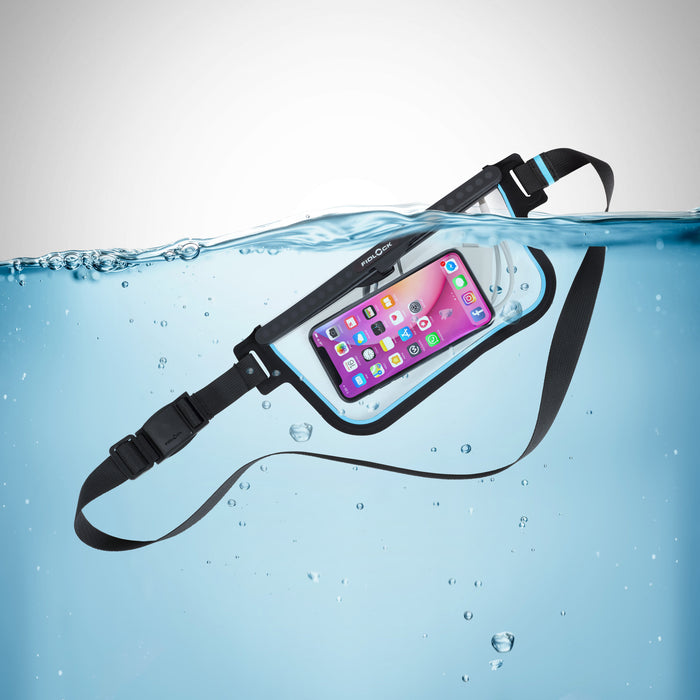
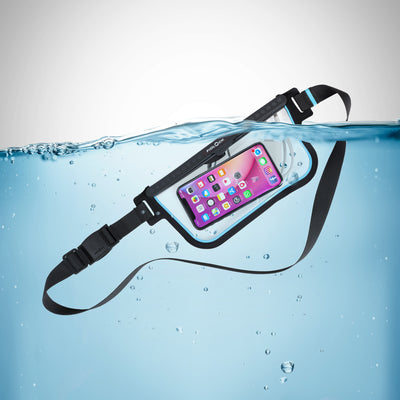
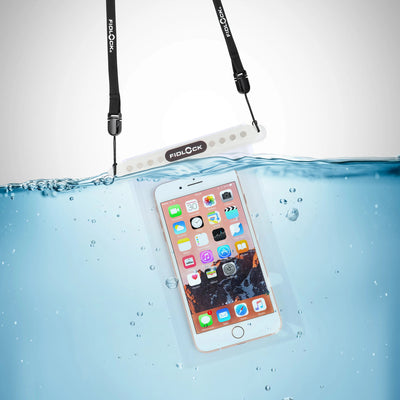
Pouches work, but they swing and rub in the surf and everyone can see them.
3. A waterproof pocket in your swim shorts
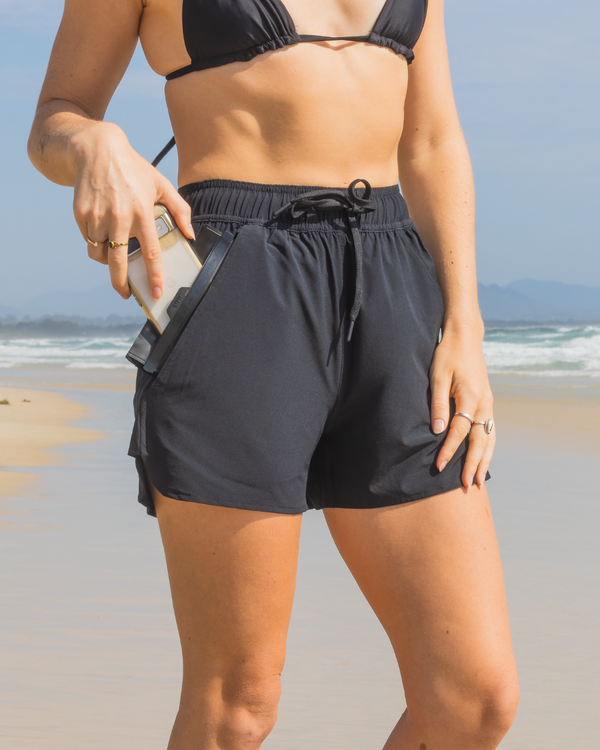
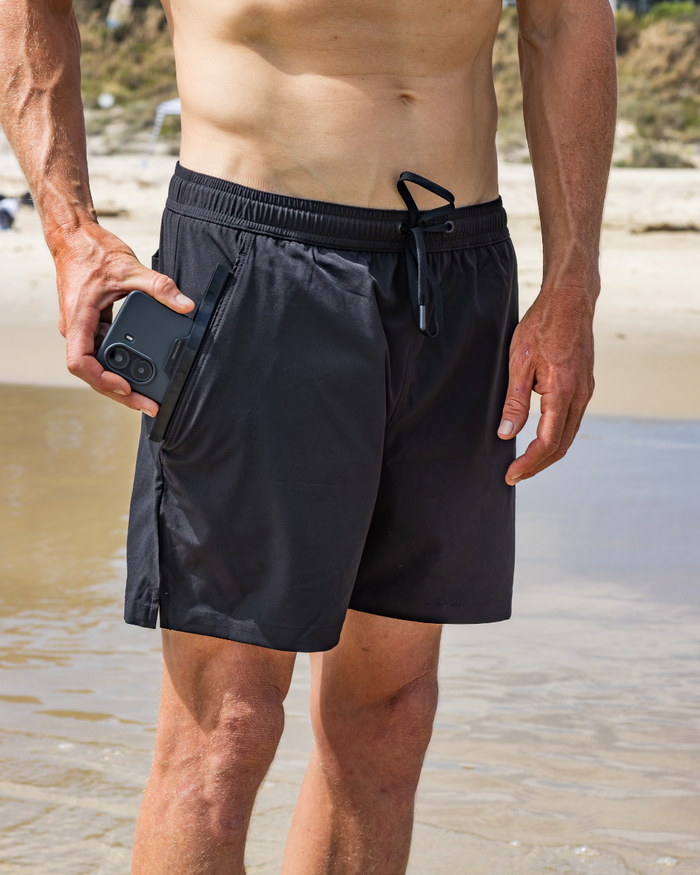
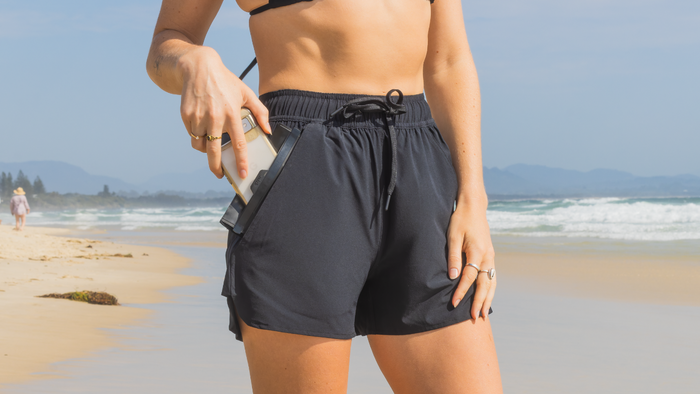
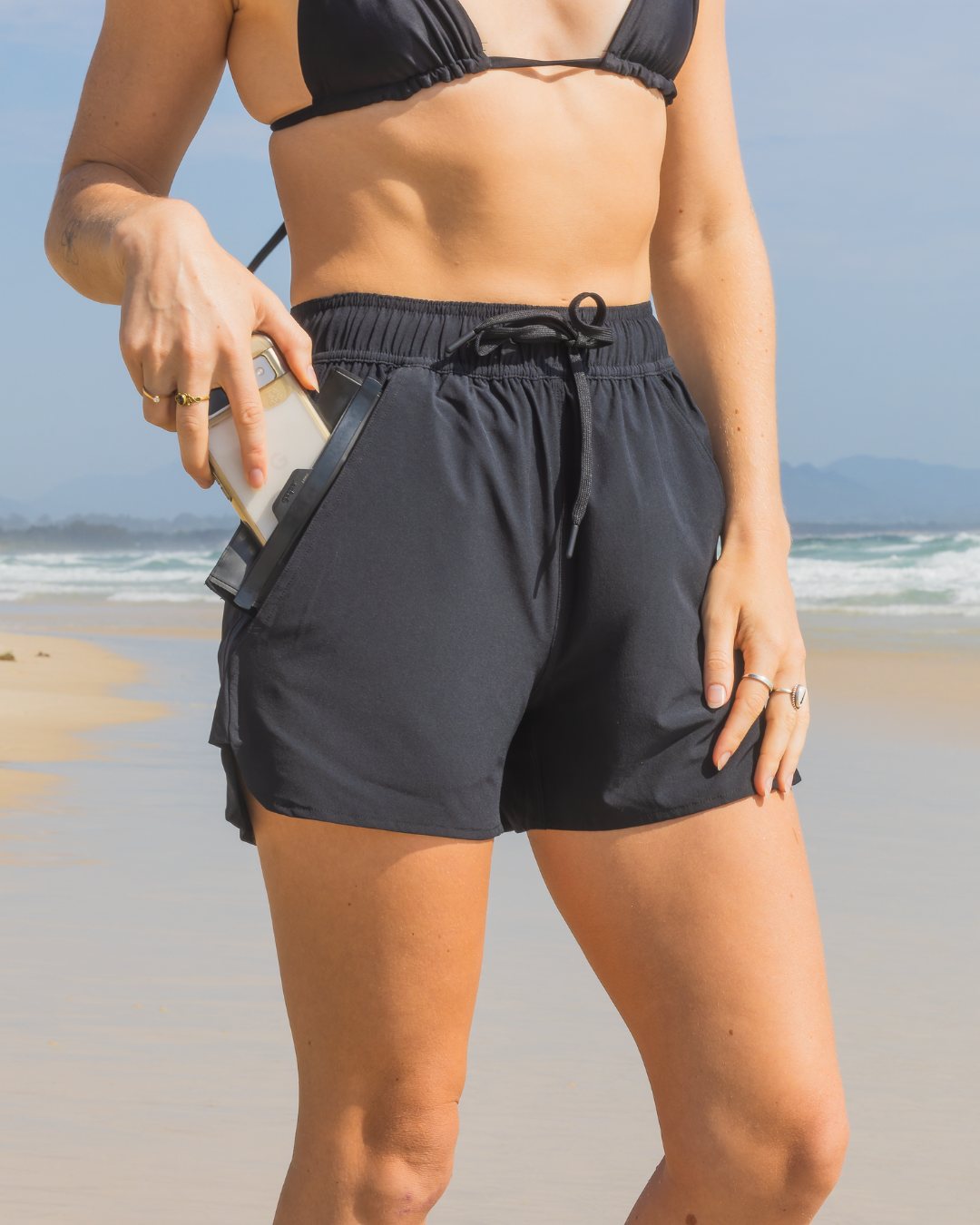
The phone stays sealed, hidden and close to your body. Our pocket is IPX8-certified to 30 metres and seals itself with magnets.
A few rules we swim by
- Rinse the pocket with fresh water after the beach.
- Check the seal is clean of sand before you swim.
- Test the pocket with a tissue before a big trip. Here's how to test it.
Can I use my phone underwater?
A sealed pocket keeps the phone dry, not usable. It's for carrying your phone while you swim, not for underwater photos.
Our picks
Men: black swim shorts or RAKE Shady Navy. Women: Hinterland Green or The Pass mid-length. Every pocket has a 3-year waterproof warranty.
FAQs
Is an IP68 phone safe to swim with?
Don't rely on it. Ratings are tested in still fresh water, and salt water and waves are harder on seals.
Will my phone fit in the pocket?
The pocket is 201 × 140mm inside. Check your phone in our phone fit guide.